Guides
Scattering ashes at sea: ceremonies, rules and ideas
Scattering ashes at sea is a quiet, fitting way to say goodbye to someone who loved the water. Most of us have pictured pouring ashes from a boat, but it's natural to feel unsure about how to arrange it or whether you need permission. This guide walks through the ceremonies and services to consider, the rules that apply, the urns that make scattering safe and respectful, and a few readings to mark the moment.
Planning the ceremony
Scattering itself is only part of the day. The bigger question is what kind of farewell you want around it, such as whether you'll hold a memorial ceremony. In most cases there are no fixed rules for a sea scattering ceremony, so it can be arranged and performed entirely around the wishes of the person who died and their family.
Some families keep it simple and private, with only close family and friends aboard. Others plan the day around the heritage of the person who died, or, if they were fun-loving, turn it into a celebration of their life with music and even dancing.
A ceremony on the boat
You may want the ceremony performed according to the religious beliefs of the person who died. Christian scatterings, for example, are often similar to a traditional service on land and sometimes include a minister who oversees the event with eulogies, prayers or a scripture reading.
A boat ceremony can be as formal or as relaxed as you like, from a structured service to a casual gathering on deck.
Other ceremony ideas
If a formal service doesn't feel right, gather only family and friends and let the day be shaped by your own memories. A heritage-led farewell is another option, and for someone who was full of life, a celebration with music feels truer than solemnity.
Types of services available
The options here are close to endless. Below are a few common approaches, any of which might suit you or spark an idea of your own.
Unattended services
Sometimes a sea scattering is wanted but the family can't be there, perhaps because of illness or because the chosen spot is a long way away. In that case, after the cremation has taken place, you send the ashes to the company performing the service.
The captain carries your loved one's ashes on the voyage and performs a dignified scattering on your behalf. Most companies welcome requests such as a particular prayer, a poem to recite or a piece of music to play.
Attended services
You can arrange the service yourself or hire a sea-burial company to handle it while you're aboard. Some offer a mariner's farewell ceremony: as the ashes are scattered, the mariner's farewell verse is read while the ship's bell tolls eight times, and mourners each toss a flower into the water as a final goodbye.
Organising it yourself
Arranging the service with family and friends lets everyone take part. Encourage people to share a story, a memory or what the person meant to them. Some families release doves as the ashes go into the water, or toss flowers that trail behind the boat as it circles the area.
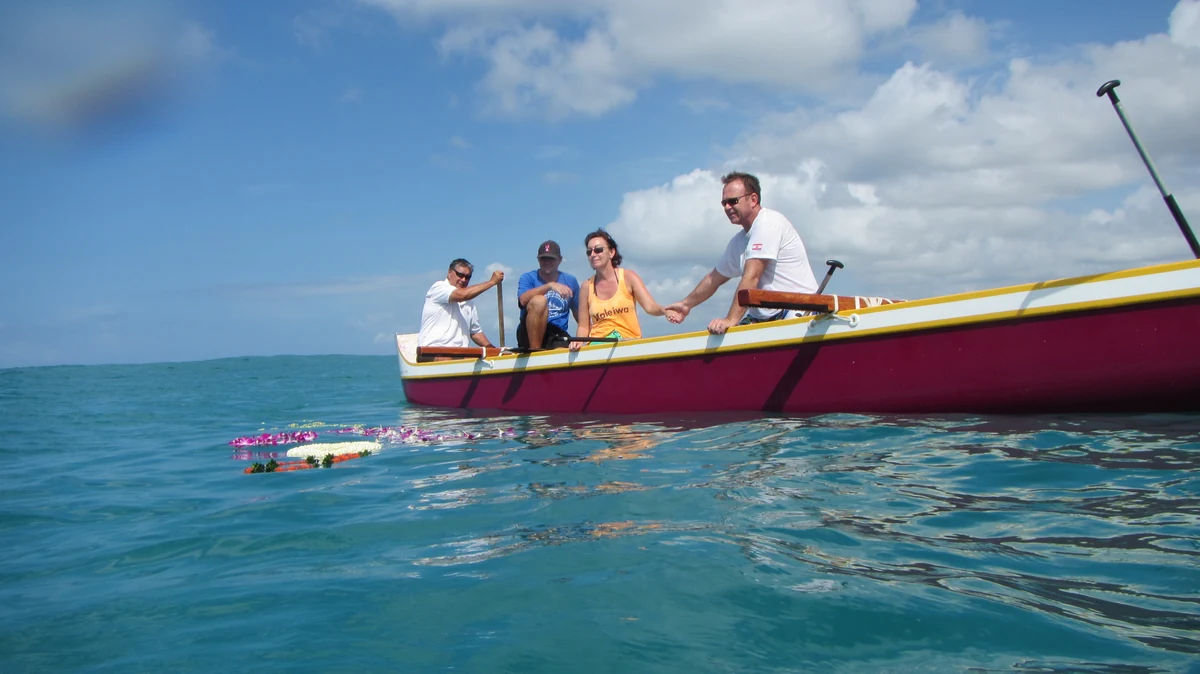
You can also build the day around the person's heritage. If your loved one was Scottish, kilts and bagpipes feel right; a Hawaiian farewell might include hula music and leis.
Religious services
A religious ceremony can guide the whole day. A Buddhist service, for instance, might include monks in their robes who chant during the passage out to the site and pray over the ashes as they are scattered.
If you are planning a Catholic cremation, note that the Vatican has spoken against the scattering of ashes; Catholics are asked instead to choose the interment of ashes in a sacred place.
Themed services
Often the service is planned around something the person loved to do. If they loved to fish, you might combine the scattering with a day of deep-sea fishing. For someone who was high-energy and full of life, a fireworks display over the water at night is a striking tribute; the ashes can be placed inside the fireworks so they literally become part of the light show.
Ashes into a memorial reef
If protecting the environment matters to you, a memorial reef is a meaningful choice. The ashes are mixed into a cast structure shaped like a natural reef, which divers lower to the ocean floor to become a permanent home for sea life. In time it can help replace damaged or destroyed coral, so your loved one keeps giving back to the earth.
Spreading ashes at the beach
If a boat isn't practical, the shoreline offers gentle alternatives.
Trenching is one method. You dig a shallow trench in the sand in any shape you like, perhaps the person's name, a heart or a circle, pour the ashes in and lightly cover them with sand. Family often form a circle around the trench for a short ceremony. Choose a spot where the incoming tide will gradually wash the ashes out to sea.
Another idea is for mourners to form a circle in the water on surfboards, or in small boats or canoes for non-surfers, while the ashes are poured from a boat in the center. Done at dusk with lit candles on each board or boat, it's a quietly beautiful farewell.
Sea-scattering rules: do you need permission?
The rules for scattering cremated remains are far less strict than those for burying a non-cremated body at sea. Ashes may be scattered at any depth as long as you are three or more nautical miles from land.
Anything you place in the water, such as flowers or a container for the ashes, must be made from biodegradable materials. You are also required to contact the United States Environmental Protection Agency (EPA) within 30 days of the scattering. The EPA website lists the forms and the regional address for your state.
Many people don't worry about the regulations and scatter in the spot that mattered to them, and patrols are not out searching for grieving families. We're not condoning it, and that's your own decision, but we strongly encourage you to stay beyond the three-mile line and to use biodegradable urns and flowers so nothing is left behind.
Urns for scattering at sea
Many people simply pour the ashes straight into the water, and no special urn is needed for that. Some use the temporary container the funeral home or crematorium provided.
When you scatter directly, check the direction of the wind first, otherwise the result can be messy. A few approaches keep things tidy: placing or tossing an enclosed biodegradable urn into the water is a safer option than pouring, and there are even containers designed to send the ashes several feet into the air.
Biodegradable water urns
Urns designed to break down quickly in water now come in many shapes and designs. A flower-style urn made from biodegradable paper is a lovely choice: placed on the surface, it floats for several minutes before slowly dissolving and releasing the ashes. They come shaped like seashells, turtles and more.
For something more unusual, a miniature Viking ship lets you place the ashes and a few mementos on board, set it adrift at dusk and, with the ship in flames, watch it sail over the horizon. Specialist makers also offer exotic handmade urns, including vessels made from sand and gelatin or from Himalayan rock salt, and matching collection sets that hold a small portion of the ashes to display at home.
Poems and quotes for a sea farewell
A short reading can carry the moment when words are hard to find. A few that suit a scattering at sea are below.
Sea Fever — John Masefield
"I must go down to the seas again, to the lonely sea and the sky, / And all I ask is a tall ship and a star to steer her by" — Masefield's verse closes with "quiet sleep and a sweet dream when the long trick's over," a fitting note for a final voyage.
Alone I Will Not Be — Capt. Chad Theesfeld
"My comfort will come from the sea... When the sun sets on the ocean blue, remember me as I will always remember you... but be at peace for I am free."
A few short quotes
"Grief is the price we pay for love." — Queen Elizabeth II. "In the end, it's not the years in your life that count. It's the life in your years." — Abraham Lincoln. And from Andrew O'Hagan, on growing up by the sea: you spend your time looking at the horizon, living "between two places, the scene of arrival and the point of departure."
Is scattering at sea right for you?
The ceremonies, urns and methods here only scratch the surface of what's possible. The right farewell is the one that honors how your loved one lived and gives those left behind a place to gather and say goodbye.
You don't have to use all of the ashes, either. Many families scatter a portion at sea and keep the rest for a piece of memorial jewelry, a cremation diamond or another lasting keepsake, so there's always something to hold onto.
FAQ
Scattering ashes at sea: ceremonies, rules and ideas: common questions
- Do you need permission to scatter ashes at sea?
- In the US you don't need a permit, but you must follow the EPA's rules for scattering cremated remains at sea. Ashes may be scattered three or more nautical miles from shore, only biodegradable materials may go in the water, and you must contact the EPA within 30 days of the scattering.
- How far from shore do you have to be?
- Three or more nautical miles from land. Most charter and sea-burial companies travel beyond the three-mile line before the ceremony.
- What kind of urn should I use for a sea scattering?
- You can pour directly from any container, but a biodegradable water urn is safer and cleaner. These float for a few minutes before dissolving and releasing the ashes, and they come in shapes like seashells and turtles. Stick to biodegradable materials, since non-biodegradable containers aren't permitted in the water.
- Can the family be present if we use a service?
- Yes. You can choose an attended service and join the voyage, or an unattended one where the ship's captain scatters the ashes on your behalf and can honor requests such as a prayer, poem or piece of music. Unattended services suit families who can't travel to the location.
- Can Catholics scatter ashes at sea?
- The Vatican has spoken against scattering ashes. Catholics are instead asked to choose the interment of ashes in a sacred place, such as a cemetery or columbarium.
- Do I have to scatter all of the ashes?
- No. Many families scatter only a portion at sea and keep the rest for a keepsake, such as memorial jewelry or a cremation diamond, so they have something to hold onto afterward.

About the author
Adam Binstock
Founder of Cremation Institute
Keep reading
Related guides
Planning a cremation?
See what a direct cremation should cost where you live, and compare trusted providers before you pay for extras you may not need.
Direct cremation costs →