Guides
The cremation process: a step-by-step guide
Most of us never learn much about cremation until we have to make some difficult end-of-life decisions. That can make a hard moment harder. This guide walks through the whole process plainly, from what actually happens inside a crematorium to how much ash a family receives, what it costs, and the laws and choices involved along the way. Take your time with it. The aim is simply to bring a little clarity when you need it most.
What cremation is
Cremation is a straightforward and standardized process. When a person dies, their body is taken to a funeral home or crematorium, the required paperwork is completed, and the procedure begins shortly after.
Following some preparation, the body is placed in a cremation chamber and exposed to intense heat. The temperature is high enough to vaporize most of the organic matter and reduce the bones to fragments. After a cooling period, those fragments are processed to a finer, sand-like consistency using a machine called a cremulator. The remains are then collected and returned to the family.
Cremation has grown steadily as a choice in the United States. Industry projections have it overtaking burial, with cremation forecast to surpass burial around the start of the 2020s. Much of that shift comes down to cost, flexibility, and changing attitudes toward how we say goodbye.
Inside a crematorium
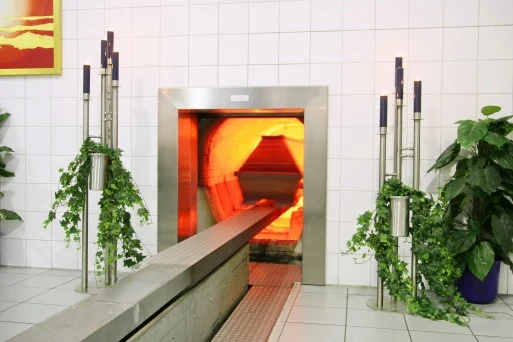
A crematorium is the facility where cremations are carried out. Some funeral homes have their own, but in most cases it is a separate facility. Inside are one or more cremation chambers, also known as retorts.
The chamber is usually fueled by gas or propane and reaches a temperature of around 2,000 degrees Fahrenheit. Most modern crematoriums are controlled electronically.
Many crematoriums include a viewing room with seating and a window looking onto the chamber, so families who wish to can watch. You may also find a retail area offering urns and keepsakes for the ashes.
The cremation process, step by step
Once the documentation is completed and signed, the cremation can proceed. Here is what typically happens, in order.
The funeral or memorial service
A service does not always take place, especially with a direct cremation. When there is a ceremony, it can be held either before the cremation with the body present, or afterward with the ashes present. Both are common, and the right choice depends on the family.
Identification of the deceased
Before choosing a crematory, ask how they identify the body so you can be confident you receive the correct remains. Identification is usually handled with a document or tag that stays with the body from the moment it is collected until the ashes are returned to the family.
Preparing the body
Several steps prepare the body. Anything that cannot be cremated, such as jewelry, is removed first. Pacemakers must be taken out in advance because they can explode under high heat, and radioactive therapeutic implants are removed because they can harm the environment.
The body is then placed in a container. This may be a simple cremation casket, sometimes called an alternative casket, usually made of wood or sturdy cardboard. Because a casket is not required, the body is sometimes wrapped in a shroud instead.
The cremation
The chamber is preheated to roughly 2,000 degrees Fahrenheit. Once that temperature is reached, the casket or body moves into the chamber, automatically in modern facilities or manually in older ones.
On average the cremation takes about two hours, until the body is reduced to bone and fragments. A cooling period of roughly thirty minutes to an hour follows.
Collecting the ashes
The remains are examined and any metal, such as surgical pins or screws, is removed by hand or with a magnet. The bone fragments are then placed in a cremulator, which processes them into a gritty, sand-like consistency. The ashes are usually transferred into a temporary container and given to the family.
What cremated remains actually are
The word "ashes" is not quite accurate. What you receive is processed skeletal remains.
Bone is made largely of calcium phosphates and carbonates, which is why it endures the intense heat of the chamber when soft tissue does not. All organic tissue is eliminated and fluids evaporate, but the bone fragments remain. The cremulator then grinds those fragments into the sand-like matter that is returned to the family.
The amount varies with the size of the person and the density of their bones, and many families are surprised by how much they receive. The cremated remains of an average adult weigh roughly five pounds. Age, body size, bone density, and even the container used during cremation can all affect the final amount.
Caskets, costs, and common questions
A few questions come up again and again. Here are the ones families ask most often, including the laws that govern the process.
Can you rent a casket?
Yes. Caskets are often rented when a service is held before the cremation, which is far more economical than buying an expensive casket that would be destroyed. A rental casket looks like a standard one but has a removable insert, the alternative casket, that actually holds the body. After the service the insert and body are removed and cremated, while the outer casket is rented again. You can read more in our guide to cremation caskets.
What is direct cremation?
Direct cremation is the simplest and most economical option. There is no viewing, wake, or service beforehand. A funeral home may handle the paperwork and transport the body to the crematorium, and afterward the ashes are returned to the family or handled by the crematorium. Learn more on our direct cremation page.
Is burial more expensive than cremation?
In most cases, yes. The casket or coffin is usually the largest single expense in a burial, and a casket is not required for cremation. There is also no need for embalming or cosmetic preparation when there is no viewing, and unless you plan to bury the ashes, no need to buy a plot, dig a grave, or purchase a marker. For a fuller comparison, see cremation vs burial and our cremation costs guide.
Do funeral homes have a crematorium?
Some do, but most contract with a third-party facility. That can mean an extra charge for transporting the body, and the cremation fee may be billed separately. Ask the funeral director to spell out which charges are included.
Can the family witness the cremation?
In most crematoriums, yes. A separate viewing room with a window into the chamber area is normally available. Some locations charge a small fee for this.
Do all religions permit cremation?
Most do. The Catholic view has gradually shifted to allow it, and Jehovah's Witnesses generally view it favorably. A few faiths, including Judaism and Islam, still do not permit it. Our piece on what the Bible says about cremation explores the religious questions in more depth.
Are there laws for cremation?
A handful of rules apply everywhere, while others vary by state. An authorization form or declaration of disposition must be signed, usually by the next of kin, after which the state issues a permit. Many states require a waiting period, commonly 24 to 48 hours. Industry rules also apply: providers should be licensed, identification must ensure families receive the correct remains, and the cremation container must burn easily with metals removed. In almost all cases the funeral home or crematorium handles these details for you.
Advantages and disadvantages
Cremation suits many families but not every situation. It helps to weigh both sides before deciding.
Advantages
Cremation tends to cost far less than burial and is widely considered more environmentally friendly. It is quicker and easier to arrange, and a memorial service can be held afterward, giving the family more time during their grief.
- ✓Usually much less expensive than burial
- ✓Often seen as more environmentally friendly
- ✓The memorial service can be held later, easing the timeline
- ✓Ashes can be kept with you if you move away
- ✓Remains can be shared and sent to other family members
- ✓Ashes can be made into jewelry, art, or other keepsakes
- ✓Eases pressure on increasingly overcrowded cemeteries
Disadvantages
Cremation is permanent and may conflict with religious beliefs, and some people find closure harder without a body to mourn. These are worth talking through as a family.
- ✓It is permanent and cannot be reversed as a burial can be exhumed
- ✓It may be forbidden by some religions
- ✓Without a body, some people struggle with closure
- ✓Family members who disagree with it may feel tension
- ✓There is a small chance the ashes could be lost or spilled
The cost of cremation
Cremation prices are not regulated, so costs vary between facilities. In most locations you can bypass the funeral home and arrange a cremation directly with the crematorium, which is the least expensive route. Picking up the body within a set driving distance and handling the paperwork are usually included.
When a funeral home makes the arrangements, costs begin to rise. There is a basic fee that varies widely and should at least cover the paperwork and collecting the body. Common add-ons include the following approximate amounts:
- ✓Transporting the body to the crematorium — around $300
- ✓The cremation itself — roughly $250 to $400
- ✓Embalming and cosmetic preparation for a service beforehand — around $700
- ✓Funeral service — around $900
- ✓Casket — $2,000 and up
- ✓Rental casket — around $600
- ✓Plot, grave opening and closing, and a marker — roughly $400 to $1,000
What to do with the ashes
Cremation is not the end of the decisions. There is still the question of a final resting place. Below are a few common paths; our what to do with ashes guide offers many more ideas.
Interment
You can still hold a burial and graveside service. Many cemeteries set aside a specific area for the interment of ashes, and because the plots are smaller they usually cost less than a full-body plot. A columbarium, a free-standing structure or wall of niches, is another option, with room for the urn and a few small mementos.
Scattering
Ashes are often scattered somewhere meaningful to the person, such as a favorite fishing hole, a stretch of woods, or simply a beautiful place they loved. Some families choose more unusual sites, scattering from a plane, while skydiving, or even sending ashes into space. Our scattering ashes and scattering at sea guides have more ideas.
Urns, jewelry, and keepsakes
Many families keep the ashes close. Placing them in an urn or box on a mantel is a common choice, but there are many others. Cremation art can turn remains into ornaments, decorations, or paintings, and small keepsakes hold a little of the ashes. Some choose a necklace worn near the heart or even cremation diamonds as a lasting memorial.
The pet cremation process
The process is much the same for pets, so most of what is described above applies. Cats, dogs, and horses are the most commonly cremated, though smaller animals such as birds, rabbits, and hamsters are cremated too.
The main difference is that pet cremation comes in three types. There may also be small extra fees for after-hours pickup, longer driving distances, or the container for the ashes. See our pet cremation, dog cremation, and cat cremation guides for more.
Private
Your pet is placed alone in a separate chamber, so you are guaranteed to receive only their ashes.
Witnessed
You can watch the process as it happens, which also reassures you that the ashes returned belong only to your pet.
Communal
Often chosen for its lower cost, sometimes about half the price of the other types, your pet is cremated alongside other animals and the ashes are usually not returned. Costs typically run from about $50 to $300, and for a horse roughly $200 to $1,500 or more depending on weight.
FAQ
The cremation process: a step-by-step guide: common questions
- How long does cremation take?
- The cremation itself averages about two hours, until the body is reduced to bone fragments, followed by a cooling period of roughly thirty minutes to an hour. The full process, including paperwork and any waiting period, takes longer.
- How much ash is left after cremation?
- The cremated remains of an average adult weigh about five pounds. The exact amount depends on the person's size and bone density, along with their age and the container used during cremation.
- Are cremated remains really ashes?
- Not exactly. The sand-like matter you receive is processed bone. Soft tissue is eliminated by the heat, while the calcium-rich bone endures and is then ground in a cremulator into the fine consistency families recognize as ashes.
- Do you need a casket for cremation?
- No. A casket is not required. The body can be placed in a simple cremation container of wood or sturdy cardboard, or wrapped in a shroud. If a service is held first, families often rent a casket rather than buy one.
- Is there a waiting period before cremation?
- Often, yes. A permit must be issued and many states require a waiting period before cremation, commonly 24 to 48 hours. Specific requirements vary by state and locality.
- Can the family watch the cremation?
- In most crematoriums, yes. A viewing room with a window onto the chamber is usually available, sometimes for a small fee.

About the author
Adam Binstock
Founder of Cremation Institute
Keep reading
Related guides
Planning a cremation?
See what a direct cremation should cost where you live, and compare trusted providers before you pay for extras you may not need.
Direct cremation costs →